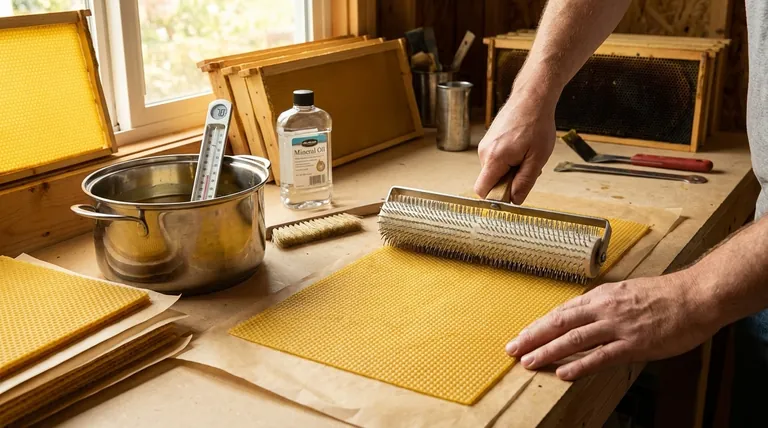
Producing reliable wax foundations by hand requires precision, patience, and the right techniques. Whether you're a commercial beekeeper or a distributor supplying apiaries, mastering manual roller methods ensures consistent, long-lasting honeycomb bases. This guide covers temperature control, rolling best practices, and troubleshooting—helping you avoid common pitfalls like brittleness or adhesion failures.
Foundations of Wax Preparation
The Science Behind Temperature Control
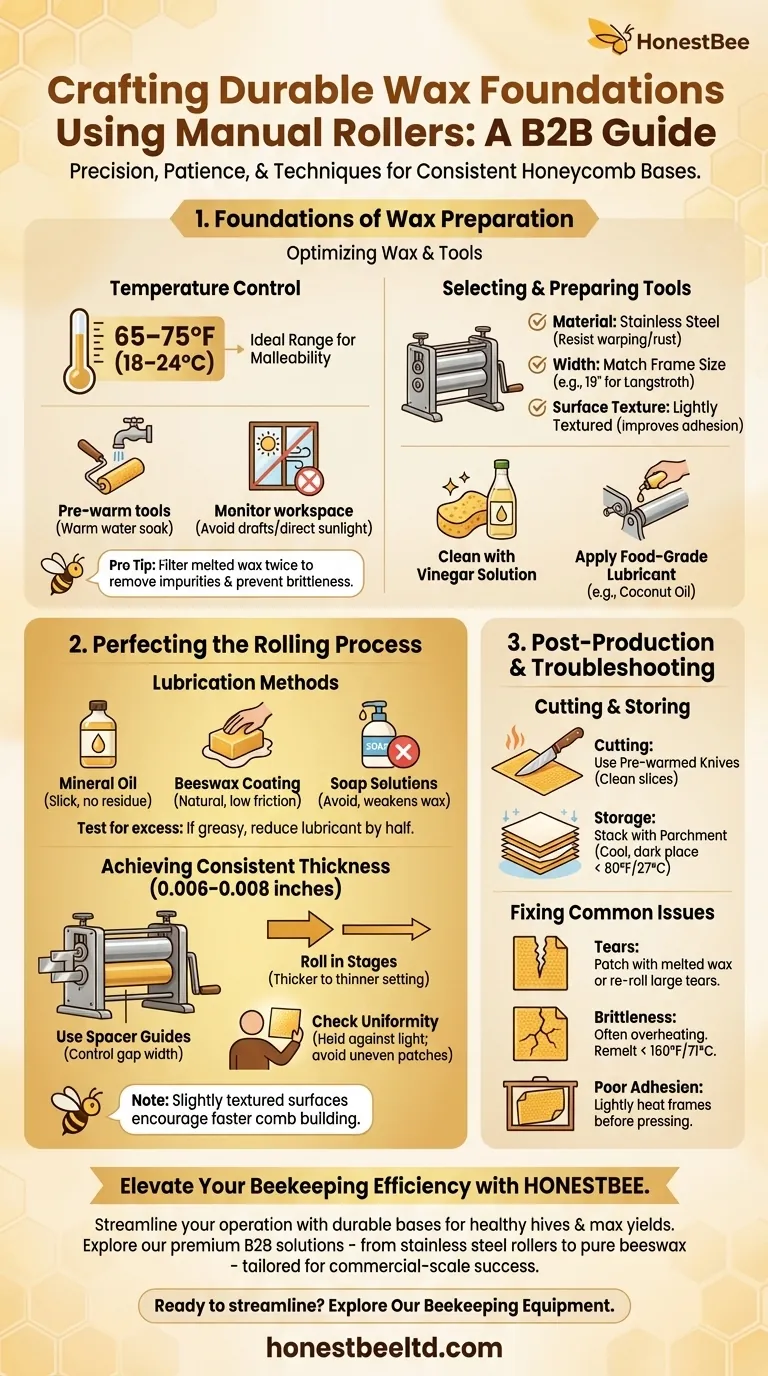
Wax behaves differently under varying temperatures. Too cold, and it cracks during rolling; too warm, and it loses structural integrity. Research shows maintaining wax between 65–75°F (18–24°C) optimizes malleability. For manual rollers:
- Pre-warm tools: Briefly soak rollers in warm water to prevent rapid cooling.
- Monitor workspace: Avoid drafts or direct sunlight that cause uneven hardening.
Pro Tip: Beeswax’s plasticity depends on its purity. Impurities (e.g., propolis residues) increase brittleness—filter melted wax twice before pouring.
Selecting and Preparing Tools for Success
Manual rollers must align perfectly to produce uniform sheets. Key considerations:
- Material: Stainless steel rollers resist warping and rust.
- Width: Match roller width to your frame size (e.g., 19 inches for Langstroth deep frames).
- Surface texture: Lightly textured rollers improve wax adhesion without tearing.
Preparation steps:
- Clean rollers with a vinegar solution to remove residue.
- Apply food-grade lubricant (like coconut oil) to hinges for smooth operation.
Perfecting the Rolling Process
Lubrication Methods Beyond Basic Soap Solutions
While diluted soap solutions are common, they can leave residues that weaken wax. Alternatives include:
- Mineral oil: Provides slickness without compromising wax durability.
- Beeswax coatings: Rubbing a thin layer of melted wax on rollers reduces friction naturally.
Test for excess lubricant: If wax sheets feel greasy, reduce lubricant volume by half.
Achieving Consistent Thickness with Manual Rollers
Commercial beekeeping relies on standardized wax foundation thickness (typically 0.006–0.008 inches). To replicate this manually:
- Use spacer guides: Insert metal shims at roller edges to control gap width.
- Roll in stages: First pass at a thicker setting, then gradually adjust rollers thinner.
- Check uniformity: Hold sheets against light—uneven patches indicate roller misalignment.
Note: Bees build faster on slightly textured surfaces. If sheets are too smooth, lightly score them with a clean comb before installation.
Post-Production and Troubleshooting
Cutting and Storing Sheets for Longevity
- Cutting: Use pre-warmed knives to slice sheets cleanly. Cold blades cause jagged edges that bees ignore.
- Storage: Stack sheets with parchment paper between layers in a cool, dark place (under 80°F/27°C).
Fixing Common Issues
- Tears: Patch small gaps with melted wax and a spatula. For large tears, re-melt and re-roll.
- Brittleness: Often caused by overheating wax. Remelt at lower temperatures (below 160°F/71°C).
- Poor adhesion to frames: Lightly heat frames before pressing wax sheets to activate bonding.
Elevate Your Beekeeping Efficiency with HONESTBEE
Manual wax foundation production doesn’t have to be guesswork. By applying these techniques, you’ll create durable bases that support healthy hives and maximize honey yields. For beekeepers and distributors seeking premium supplies—from stainless steel rollers to pure beeswax—HONESTBEE delivers wholesale solutions tailored for commercial-scale success.
Ready to streamline your operation? Explore our beekeeping equipment designed for durability and precision.
Визуальное руководство
Связанные товары
- Экономика ручной пчелиный воск тиснение мельница воск фундамент машина ролик
- Полностью автоматическая машина для тиснения пчелиного воска фундаментная мельница
- Ручной пчелиный воск гребень фундамент машина воск фундамент мельница тиснение машина
- Пчелиный воск машина пресс эмбоссер воск фундамент плесень принтер пчелиный улей оборудование изготовление лист
- Электрический пчелиный воск основы машина с операционной лоток и воск основы ролик
Связанные статьи
- Правильный ли инструмент для тиснения пчелиного воска вы выбираете? Избегайте распространенных ошибок в производстве фундаментов
- За пределами тиснителя: системное мышление, лежащее в основе идеальной вощины
- Инженерный симбиоз: Невидимая роль машины для тиснения пчелиного воска
- Как машины для производства вощины трансформируют эффективность пчеловодства
- Как машины для производства вощины и умное оборудование повышают эффективность пчеловодства