Creating high-quality beeswax foundations doesn’t require expensive equipment—just the right tools and techniques. Whether you're a hobbyist or a small-scale producer, this guide covers practical solutions for crafting durable foundations while avoiding common pitfalls.
Essential Tools for Beeswax Foundation Crafting
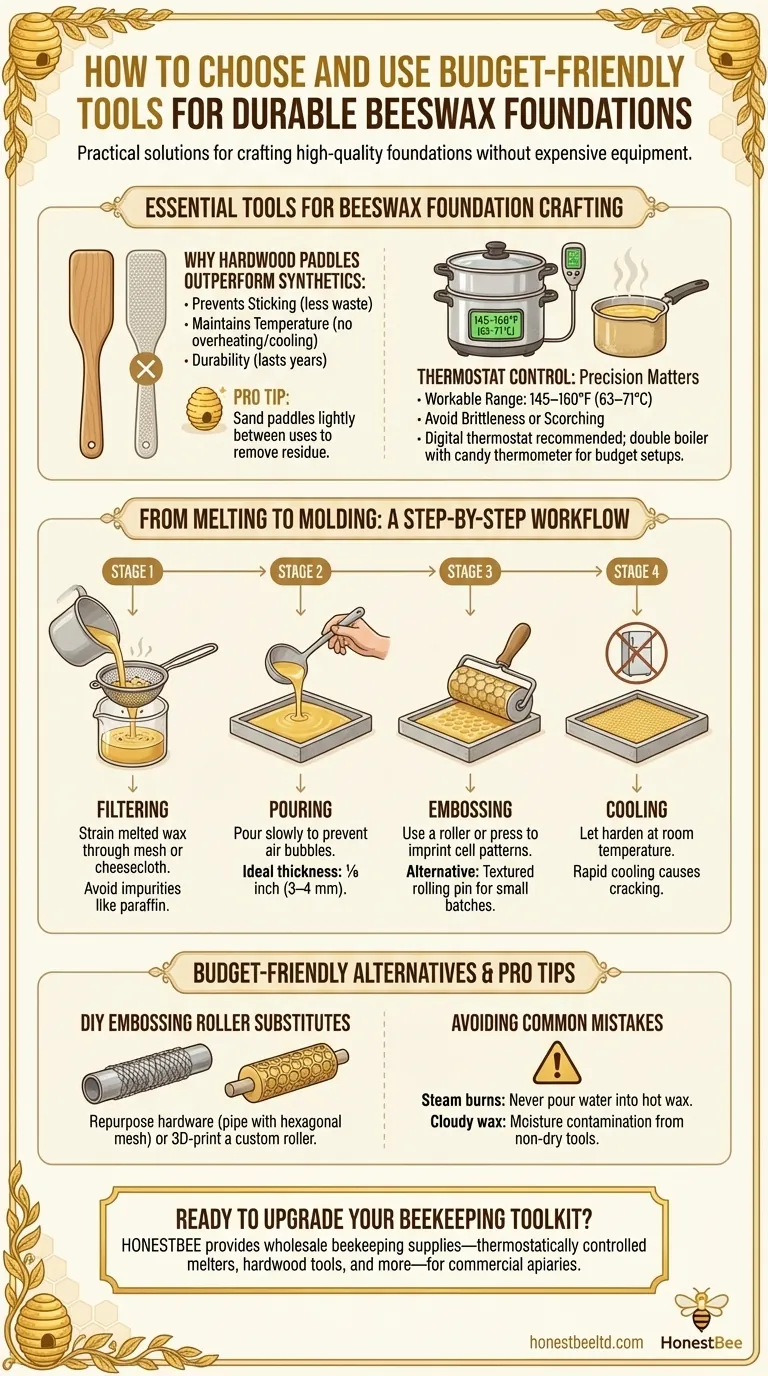
Why Hardwood Paddles Outperform Synthetic Alternatives
Hardwood paddles are a beekeeper’s best friend for smoothing and shaping beeswax. Unlike plastic or metal tools, hardwood:
- Prevents sticking: Beeswax adheres less to porous wood, reducing waste.
- Maintains temperature: Wood doesn’t conduct heat as aggressively, preventing premature cooling or overheating.
- Durability: Properly maintained hardwood tools last for years without warping.
Pro Tip: Sand paddles lightly between uses to remove wax residue and maintain a smooth surface.
Thermostat Control: Precision Matters in Wax Melting
Beeswax becomes workable between 145–160°F (63–71°C). Temperatures outside this range lead to:
- Brittleness if too cool.
- Discoloration or scorching if too hot.
A digital thermostat is worth the investment for consistent results. For budget setups, use a double boiler with a candy thermometer and monitor closely.
From Melting to Molding: A Step-by-Step Workflow
-
Filtering
- Strain melted wax through a fine mesh or cheesecloth to remove debris.
- Avoid impurities like paraffin or pesticides, which weaken foundations and risk hive health.
-
Pouring
- Pour wax into molds slowly to prevent air bubbles.
- Ideal thickness: ⅛ inch (3–4 mm) for durability without excess weight.
-
Embossing
- Use a roller or press to imprint hexagonal cell patterns.
- Alternative: A textured rolling pin (e.g., pasta roller) works for small batches.
-
Cooling
- Let foundations harden at room temperature—rapid cooling (e.g., refrigeration) causes cracking.
Budget-Friendly Alternatives and Pro Tips
DIY Embossing Roller Substitutes for Small-Scale Production
Commercial rollers cost hundreds, but you can:
- Repurpose hardware: Use a pipe wrapped with hexagonal wire mesh.
- 3D-print a custom roller (designs available online).
Avoiding Common Wax-Water Interface Mistakes
- Steam burns: Never pour water into hot wax (it vaporizes instantly).
- Cloudy wax: Moisture contamination occurs if tools aren’t fully dry.
Ready to Upgrade Your Beekeeping Toolkit?
HONESTBEE provides wholesale beekeeping supplies—from thermostatically controlled melters to hardwood tools—helping commercial apiaries and distributors produce flawless foundations efficiently. Explore our catalog for durable, purpose-built equipment that simplifies your workflow.
Final Thought: The right tools transform raw beeswax into resilient foundations, supporting healthier hives and smoother harvests. Whether you’re improvising or investing, precision and patience yield the best results.
Визуальное руководство
Связанные товары
- Пчелиные восковые листы для фундамента Пчелиный улей для фундамента оптом
- Форма для основы из пчелиного воска в стиле блокнота Форма для основы из воска
- Красочные силиконовые формы для пчелиного воска для пчеловодства
- Пчелиный воск машина пресс эмбоссер воск фундамент плесень принтер пчелиный улей оборудование изготовление лист
- Полностью автоматическая машина для тиснения пчелиного воска фундаментная мельница
Связанные статьи
- Как вощины из пчелиного воска улучшают здоровье колоний и эффективность пчеловодства
- От жидкости к решетке: освоение теплового контроля при укладке пчелиных сот
- Хватит винить свои вальцы: истинный источник бракованной вощины
- Почему листы вощины из пчелиного воска трескаются — и как это исправить навсегда
- Почему ваша вощина из пчелиного воска терпит неудачу: руководство по предотвращению дорогостоящего коробления и поломки